The Lost Blues Archive Est. 1920 · Reopened 2026
Index 01 — The Forgotten

Forty-three names worth more than a footnote

These are not obscure for the sake of being obscure. Each one either changed how the music sounded, wrote something the century got rich on, or was simply better than most of what got remembered. The reasons they slipped are in every entry: a flat fee, a segregated market, a missing photograph, a death at thirty-two.

Links open Spotify and YouTube search results, plus Discogs for physical copies. Most of this music is out of print and is not streaming in its original form — a reissue or a compilation is usually the only way to hear it.

No. 01 BR

Buddy Reed

Rialto, California Bacon Fat · Blue Horizon Still working

The one living name in this index, and the reason it opens here. Ivan Elmo “Buddy” Reed has been inside this music for sixty years and is still inside it: raised around San Bernardino, playing professionally by the mid-1960s, and hired in 1968 by George “Harmonica” Smith as the guitarist in the house band at Small's, 53rd and Avalon, in Watts.

In 1970, in the studio, it was Reed who named the band Bacon Fat — the outfit that recorded for Blue Horizon. He toured behind Big Mama Thornton, spent a year in Little Richard's band, and has the photographs of an ordinary working life to prove the rest: beside Muddy Waters, beside Willie Dixon, on stage with Bo Diddley. Since then he has led his own band, Buddy Reed & th' Rip It Ups, across four decades of saloons, roadhouses and clubs — venues that do not make careers but do make musicians.

Some of the recognition has arrived: the Arizona Blues Hall of Fame in 1998, and citations from the City of Los Angeles and the California State Senate. Tough Enough was reissued in 2025; in 2026, at sixty years in, he put out a new single, “Old Time Used to Be.” What has not arrived is the rest of the record book — which is the argument made at length on his own page.

WatchBuddy Reed & th' Rip It Ups · live at the Poor House Bistro · 16 August 2014
Open on YouTube
Grease One For Me Tough Enough Still touring
No. 02 GW

Geeshie Wiley

c. 1908 – unknown Paramount · 1930–31 Six sides

Wiley travelled from Houston to Grafton, Wisconsin in 1930 with Elvie Thomas and cut six songs for Paramount — “Last Kind Word Blues,” “Skinny Leg Blues,” “Motherless Child Blues,” “Over to My House,” “Pick Poor Robin Clean,” “Eagles on a Half.” Then she disappeared from the record. No photograph of her is known to exist; the details of her life contradict each other in every source. The music does not: a modal, minor-key guitar figure and a voice that sounds like it is remembering something older than the blues. Historian Don Kent called her possibly “the rural South's greatest female blues singer and musician.”

She was a cult item for collectors, then a revelation to filmgoers when Terry Zwigoff used “Last Kind Word Blues” in Crumb in 1994. Fewer than ten original copies of her records are believed to survive.

Start here“Last Kind Word Blues” · Paramount 12951 · 1930
Open on YouTube
Last Kind Word Blues Paramount 12951 No known photo
No. 03 TJ

Tommy Johnson

1896 – 1956 Paramount · 1929–30 Five records

Before Robert Johnson was a legend, Tommy Johnson was the man who told people he had gone to a crossroads at midnight and traded his soul for the guitar. He said it out loud, to journalists, and he played like a man with something to prove — a high, keening falsetto, a rolling tremolo, lyrics that treat the supernatural as ordinary weather.

He made five records for Paramount between 1929 and 1930 and then, for practical purposes, stopped existing as a recording artist. He played houses and juke joints around Crystal Springs, Mississippi, drank heavily, and died in 1956 with almost nothing on record to show for the legend. “Big Road Blues” became a standard. His own “Alcohol and Jake Blues” survives on two known copies — the most expensive blues 78 ever sold, at $37,100.

Start here“Canned Heat Blues” · Victor · 1928
Open on YouTube
Big Road Blues Paramount 1250 The real crossroads story
No. 04 MM

Memphis Minnie

1897 – 1973 Columbia · Vocalion · Decca · Chess 200+ tracks

Minnie played lead guitar, wrote her own material, and out-recorded almost every man in the genre across four decades and a dozen labels. “Bumble Bee” (1930) was her breakthrough; “Me and My Chauffeur Blues” (1941) is a masterclass in control. With her first husband Kansas Joe McCoy she cut “When the Levee Breaks” in 1929 — the song Led Zeppelin would make immortal four decades later, with the writing credit handled rather differently.

She was one of the first blues players of any gender to go electric, and she ran her own career in an industry that assumed women sang and men played. After a stroke and a decline in health she retired to Memphis in 1955, spent her last years in a nursing home, and was buried in an unmarked grave. The headstone came later, from fans.

Start here“Bumble Bee” · Vocalion · 1930
Open on YouTube
Bumble Bee Me and My Chauffeur Blues When the Levee Breaks
No. 05 WT

Big Mama Thornton

1926 – 1984 Peacock · Arhoolie · Vanguard “Hound Dog,” “Ball 'n' Chain”

Willie Mae Thornton could sing, drum and play harmonica, and she fronted the Johnny Otis Revue as its show-stopper. In 1952 she recorded “Hound Dog” for Don Robey's Peacock label in Houston; released in 1953, it topped the R&B chart and sold enormously in the Black market. She was twenty-six. Three years later a young white singer from Memphis cut a version of it and became the biggest star in the world. Thornton saw very little of that money — she hadn't written “Hound Dog,” and the contract was not built to pay her.

She did write “Ball 'n' Chain,” which Janis Joplin covered to fame in 1968; Thornton recorded her own version the same era. By the 1970s she was playing Bay Area clubs, touring Europe, and living with the consequences of a career the industry had already decided was over. Britannica's summary is blunt: “Overlooked by white audiences during her lifetime.” She was inducted into the Rock and Roll Hall of Fame in 2024, forty years after her death.

Start here“Hound Dog” · Peacock · 1953
Open on YouTube
Hound Dog (1953) Ball 'n' Chain Rock Hall, 2024
No. 06 JS

J. D. Short

1902 – 1962 Paramount · Vocalion Four 78s, 1930

Born in Port Gibson, Mississippi, Short cut four two-sided records for Paramount on a single day — 1 June 1930 — and then made a handful of sides for Vocalion under the name Jelly Jaw Short. For most of the last century, only one of those four Paramount discs was known to exist at all, in a single copy. A second turned up decades later, sold by a local picker to collector John Tefteller, and the music had to be re-mastered from a disc that could have been thrown out with a house clearance.

His guitar playing sits between the Delta and the songster tradition — rougher than the revival would later prefer, and less mythologised than the men he played alongside. He died in 1962, just before the folk revival went looking for people like him.

Start here“Starry Crown Blues” · 1930
Open on YouTube
Paramount, 1930 Recorded as Jelly Jaw Short One copy, for decades
No. 07 SJ

Skip James

1902 – 1969 Paramount · 1931 18 sides in one session

James walked into Paramount's Grafton studio in 1931 and cut eighteen songs in a single session — thirteen on guitar, five on piano. “Devil Got My Woman,” “Hard Time Killin' Floor Blues,” “22-20 Blues,” played in a falsetto over an open-D-minor tuning he had learned from Henry Stuckey, who had picked it up from Caribbean soldiers in France. Robert Johnson's “32-20 Blues” and “Hell Hound on My Trail” both borrow from him.

The records sold badly as the Depression closed the market, and James became a minister and quit the blues. He was found in 1964 by three young collectors and put on stage at the Newport Folk Festival, where a folk audience gave him a second career he accepted with visible ambivalence. He died in 1969. His Paramount originals remain among the rarest and most coveted of the era.

Start here“Devil Got My Woman” · Paramount 13065 · 1931
Open on YouTube
Devil Got My Woman Hard Time Killin' Floor Blues Newport, 1964
No. 08 SH

Son House

1902 – 1988 Paramount · Library of Congress Recorded 1930, 1941–42, 1965

A preacher who took up the guitar and then took up the blues with a ferocity nobody matched — House sang as if the sermon and the sin were the same argument. His 1930 Paramount sides are canonical now, but they sold poorly during the Depression, and he spent the next decade driving a tractor on a cotton plantation. When Fisk University and the Library of Congress recorded him in 1941–42, those tapes weren't issued until 1962.

He moved to Rochester, New York in 1943, left music, and was rediscovered in the mid-1960s by young enthusiasts. The revival gave him a decade of festival stages and students who included, at one remove, everyone from the Rolling Stones to Bonnie Raitt. He had taught Muddy Waters. The canon keeps his name; the ledger keeps the forty years in between.

Start here“Death Letter Blues” · Columbia · 1965
Open on YouTube
My Black Mama Death Letter Rediscovered in Rochester
No. 09 OR

Otis Rush

1935 – 2018 Cobra · Chess · Delmark “I Can't Quit You Baby”

A left-handed guitarist who played upside down and strung backwards, Rush made the West Side sound in 1956 with “I Can't Quit You Baby,” a slow minor-key blues that climbed the R&B chart and taught a generation of British guitarists how to bend a string with intent. “Double Trouble” followed. Led Zeppelin, Clapton and Stevie Ray Vaughan all built vocabulary out of those records.

His own career never matched the influence. Bad management, bad contracts and a collapsing club circuit cost him most of the 1960s; a stroke in 2003 ended his playing. He was a genius with a handful of perfect singles and no sustained institutional support — the classic shape of a West Side career.

Start here“I Can't Quit You Baby” · Cobra 5000 · 1956
Open on YouTube
I Can't Quit You Baby Double Trouble West Side sound
No. 10 MS

Magic Sam

1937 – 1969 Cobra · Delmark Dead at 32

Samuel Maghett had the most modern sound in Chicago in 1957: “All Your Love” on Cobra pairs a stinging tremolo with a rhythm section that swings instead of stomps, and it still sounds like the future. He was twenty. The West Side scene he helped invent — harder, leaner, more aggressive than the South Side — produced Otis Rush and Buddy Guy, and it produced Magic Sam most purely.

Two albums for Delmark, West Side Soul (1967) and Black Magic (1968), finally captured him properly. He died of a heart attack in 1969 at thirty-two, just as a wider audience was arriving. Everything he might have made in the next thirty years is the archive's largest missing file.

Start here“All Your Love” · Cobra · 1957
Open on YouTube
All Your Love West Side Soul Died at 32
No. 11 JD

Jimmy Dawkins

1936 – 2013 Delmark · Earwig · Storyville “Fast Fingers”

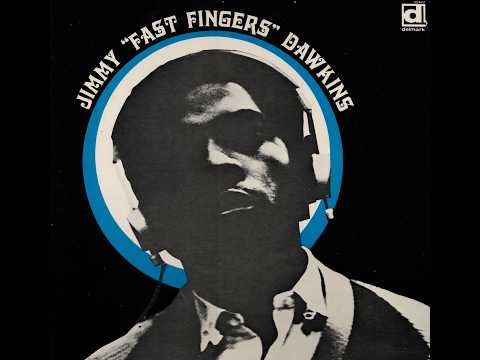
Dawkins moved from Mississippi to Chicago in 1955, worked in a box factory, and spent a decade as a sideman before Magic Sam pushed him into a studio. Fast Fingers (Delmark, 1969) is a hard, unsentimental record — long lines, a tone like a filed edge, and a shy, rasping voice that never begs for approval.

He toured Europe and Japan relentlessly, ran his own label and festival, and was respected by every guitarist who heard him. In America he stayed a cult. His obituaries in 2013 were shorter than his discography deserved — which is the whole point of this archive.

Start here“Fast Fingers” · Delmark · 1969
Open on YouTube
Fast Fingers West Side, second wave Earwig Records
No. 12 JH

Jessie Mae Hemphill

1923 – 2006 High Water · Vogue · HighTone She-Wolf, 1981

Hemphill came from a dynasty: her grandfather Sid Hemphill led one of the great fife-and-drum bands of the North Mississippi hill country, and her family played everything. She started guitar at seven, but spent decades playing picnics and family gatherings, not stages. Field recordings were made in 1967 and 1973 and went unreleased. Her first single only came out in 1979, on the University of Memphis's High Water label, when she was in her mid-fifties.

She-Wolf followed on a French label in 1981, and she won the W. C. Handy Award for traditional female artist two years running. Her guitar style — one chord, a hypnotic groove, a tambourine under her boot — is the hill country sound at its most personal. A stroke in 1993 took the guitar. She kept singing, and died in 2006, still less known in America than in the European clubs that booked her.

Start here“Black Cat Bone” · 1980s
Open on YouTube
She-Wolf Jessie's Boogie Sid Hemphill's granddaughter
No. 13 TH

Ted Hawkins

1936 – 1995 Self-released · Rounder · Geffen “Sorry You're Sick”

Hawkins sang on the Venice Beach boardwalk for roughly twenty years, one man with a guitar and a voice that made tourists stop walking. He had learned to play in reform school and spent much of his life in and out of prison; the songs are what he had instead of a career. Watch Your Step, recorded in 1982 and self-released, is the document: Sam Cooke sweetness, a country lilt, and lyrics about illness and loneliness delivered without a trace of self-pity.

Rounder reissued it and Europe noticed. Geffen signed him in the 1990s on the strength of a Los Angeles club residency, released The Next Hundred Years in 1994, and he died in 1995 at fifty-eight — a major-label artist for about eighteen months, after two decades of being ignored by the industry that eventually came to collect him.

Start here“Sorry You're Sick” · Rounder · 1982
Open on YouTube
Watch Your Step Sorry You're Sick Venice Beach, 20 years
No. 14 SW

Sylvester Weaver

1897 – 1960 OKeh · 1923–1927 First solo blues guitar

In October 1923 a Louisville guitarist travelled to New York with Sara Martin, a singer already recording for OKeh, and backed her on “Longing for Daddy Blues” — among the first vocal blues put on record with nothing behind the voice but a guitar. Nine days later, on 2 November, he cut two solo instrumentals of his own: “Guitar Blues” and “Guitar Rag,” issued as OKeh 8109. They are usually called the first country blues guitar instrumentals, and they are among the earliest recordings of slide played with a knife blade. An OKeh advertisement from the period described the method plainly enough: sliding a knife up and down the strings while picking with the other hand.

He made twenty-five or twenty-six sides between 1923 and 1925, came back for a handful of sessions in 1927 with Helen Humes and Walter Beasley, and then stopped. He lived the rest of his life in Louisville, out of the business, and died there in 1960. The music kept travelling without him: “Guitar Rag” was reworked into “Steel Guitar Rag,” which became a country standard for Bob Wills and the Texas Playboys and then for everyone else. The tune that started it all is credited, almost everywhere, to other people.

Start here“Guitar Blues” · OKeh 8109 · 1923
Open on YouTube
Guitar Blues OKeh 8109 The first one on record
No. 15 GS

Guitar Slim

1926 – 1959 Specialty · 1953–59 A million-seller, no estate

Eddie Jones was born in Greenwood, Mississippi and grew up in New Orleans, where he learned to play loud. In 1953 he cut “The Things That I Used to Do” at Cosimo Matassa's J&M studio with a young Ray Charles running the session and playing piano — accounts of how many takes it took range from forty to eighty, which tells you what they were chasing. What they got was a guitar tone with the edges frayed: one of the earliest deliberate distortions on a blues record, and the reason his name comes up whenever anyone traces where Hendrix's sound came from. The single went to number one on the R&B chart and stayed on it for the better part of a year.

On stage he was the whole show — hair dyed, suits in colours nobody else wore, and a guitar cable long enough to walk out of the club and down the street while still playing. He died on 7 February 1959 in New York, halfway through an East Coast tour, of pneumonia. He was thirty-two. The Rock and Roll Hall of Fame includes the single in its 500 songs that shaped rock and roll; it does not include him, and there was nothing left to leave anyone.

Start here“The Things That I Used to Do” · Specialty 482 · 1953
Open on YouTube
The Things That I Used to Do Specialty 482 Died at thirty-two
No. 16 EC

Elizabeth Cotten

1893 – 1987 Folkways · 1958 onwards Grammy at ninety

She was left-handed, and she played a right-handed guitar upside down and backwards, so her thumb fell on the treble strings and her fingers picked the bass. Nobody taught her that; she had no other option. The result has a name in guitar books now — “Cotten picking” — and it is the reason “Freight Train” sounds like nothing else recorded in the 1950s. She wrote it as a girl in Chapel Hill, North Carolina, about a train she could hear from the house, and then she put the guitar down for the better part of forty years.

She worked as a domestic, and in the late 1940s was hired by the Seeger family to cook and look after the children. Mike Seeger found her playing in the house, recorded her, and Folkways issued Negro Folk Songs and Tunes in 1958, when she was sixty-five. Then came the part that belongs on this site: “Freight Train” was a skiffle hit in Britain, and the copyright had been registered in other people's names, so the woman who wrote it saw almost none of the money for years. She kept playing — folk festivals, colleges, a Grammy in 1985 for Elizabeth Cotten Live! at the age of ninety. Even her birth year is disputed: she gave 1895 all her life, and the records say 1893.

Start here“Freight Train” · Folkways · 1958
Open on YouTube
Freight Train Folkways, 1958 Forty years off the instrument
No. 17 AH

Alberta Hunter

1895 – 1984 Paramount · Columbia Twenty years a nurse

Memphis-born, Chicago-raised, Hunter was recording for Black Swan by 1921 and for Paramount by 1922, where with the pianist Lovie Austin she cut “Down Hearted Blues” — the song Bessie Smith took to Columbia the following February and sold some 800,000 copies of. Hunter's name is on it as the writer, and it launched somebody else's legend. She went on recording steadily through the 1920s, sometimes under other names to get around exclusive contracts, starred in the London production of Show Boat in 1928–29, and worked Europe the way few Black American singers of her generation could.

Then the work dried up. When her mother died in 1954 she stopped performing, trained as a practical nurse, and spent roughly twenty years at Goldwater Memorial Hospital in New York. At eighty-one she was retired by the rulebook, and within months she was back in front of a microphone, taking a residency at the Cookery in Greenwich Village in 1977. Three Columbia albums followed, Amtrak Blues among them, produced by John Hammond; she sang almost to the end, dying in 1984 at eighty-nine. Every obituary led with the comeback. The twenty years in the hospital were treated as an anecdote, when they are the part that explains the first career.

Start here“Amtrak Blues” · Columbia · 1980
Open on YouTube
Down Hearted Blues The Cookery, 1977 Twenty years a nurse
No. 18 ET

Elvie Thomas

1891 – 1979 Paramount · 1930–31 Two sides under her name

Her name was not Elvie. It was L.V., and “Elvie” is what a Paramount clerk made of it — “It's just the letters L. V.,” she told the researcher Mack McCormick years later, “that's all the name I got.” The musicians in Houston called her Slack. She left school after the fifth grade, took up the guitar at eleven, was playing country suppers at seventeen, and worked the Texas circuit with Texas Alexander and Leon Benton. In March 1930 she travelled from Houston to Grafton, Wisconsin with Geeshie Wiley, and there the two of them made the records this archive keeps returning to.

Thomas sang and played on “Motherless Child Blues” and “Over to My House” — issued as Paramount 12977 — with Wiley on second guitar and harmony, and she played second guitar on Wiley's “Last Kind Word Blues.” A year later the pair cut “Pick Poor Robin Clean.” That is the entire known catalogue: a handful of sides, then silence on record for four decades. What makes her different from most of the names here is that the silence was not death or disappearance. She was in Houston the whole time, sang in church, was known to her congregation as Mama Thomas, and lived until 1979 — long enough to be interviewed, and long enough to watch her one record become a collector's obsession. The reason she is filed under “phantom” in most histories is that nobody asked.

Start here“Motherless Child Blues” · Paramount 12977 · 1930
Open on YouTube
Motherless Child Blues Paramount 12977 Alive in Houston all along
No. 19 RN

Robert Nighthawk

1909 – 1967 Bluebird · Decca · Aristocrat · Chess One hit, then the corner

Robert Lee McCollum was born in Phillips County, Arkansas, learned guitar from Houston Stackhouse, and spent the 1930s recording for Bluebird and Decca under the name Robert Lee McCoy — good records that sold as session work sells, which is to say he was valued more as a sideman on other people's dates than as a name on the label. He vanished in the mid-1940s and came back in 1948 as Robert Nighthawk, playing electric slide with a brass pipe across the frets. His tone was cool and rounded where everyone else's was jagged, and B.B. King later named him one of his ten favourite guitarists.

In 1949 Aristocrat — the label that became Chess — released “Black Angel Blues” with “Annie Lee Blues” on the other side. It reached the R&B chart, and then the relationship went nowhere: Muddy Waters was already the house slide guitarist, and Nighthawk was too close to him to be worth the investment. He went back to playing outside on Maxwell Street in Chicago, and to King Biscuit Time on KFFA when he was in Arkansas. He was “rediscovered” busking in Chicago in 1963, filmed on Maxwell Street for a documentary, took over the radio show after Sonny Boy Williamson II died, and died of heart failure in Helena in 1967 at fifty-seven. The Blues Hall of Fame took him in 1983, sixteen years too late to be any use.

Start here“Black Angel Blues” · Aristocrat · 1949
Open on YouTube
Black Angel Blues Aristocrat, 1949 Maxwell Street, not the studio
No. 20 FL

Furry Lewis

1893 or 1899 – 1981 Vocalion · Victor Street sweeper, 1922–66

Walter “Furry” Lewis was born in Greenwood, Mississippi — the year is disputed, and the dispute is characteristic: he said 1893, the 1900 census suggests 1899, and the sources scatter between the two. He moved to Memphis as a child, busked on Beale Street, ran off with a medicine show, and lost a leg hopping a freight train in Illinois around 1916. What he played was songster repertoire as much as blues: “Kassie Jones,” “John Henry,” “Stack-O-Lee,” narrative pieces older than the form itself, delivered with a jackknife slide. Between 1927 and 1929 he cut more than twenty sides for Vocalion and Victor, including the two-part “Kassie Jones” that Harry Smith later put on his Anthology of American Folk Music.

And then, for thirty years, nothing. From 1922 he worked for the City of Memphis — street sweeper, garbage man, night watchman, depending on the year — and swept the same streets he had helped make famous until he retired in 1966. The folk revival came looking for him in 1959, and he spent his last two decades as a celebrated figure: folk festivals, college halls, The Tonight Show, a part in a Burt Reynolds film, and two nights opening for the Rolling Stones in his own city. He died in Memphis in 1981. The lesson the industry taught him is in the gap: a man can be indispensable to a city's music and still need a municipal pay cheque for forty-four years.

Start here“Kassie Jones” · Victor · 1928
Open on YouTube
Kassie Jones Victor, 1928 Forty-four years sweeping streets
No. 21 FS

Frank Stokes

c. 1888 – 1955 Victor · 1927–29 Memphis songster

Stokes came out of the medicine shows and Beale Street, a blacksmith by trade, and recorded some three dozen sides for Victor with Dan Sane as the Beale Street Sheiks. His repertoire was older than the blues — ragtime, vaudeville, minstrel tunes, work songs — and that is exactly why he matters: he is a recording of what the music sounded like before the twelve-bar form swallowed everything else.

“Take Me Back” and “Frank Stokes' Dream” are the place to start. He stopped recording in 1929 and went back to the trade, dying in Memphis in 1955. No photograph of him is widely circulated, and he is usually a footnote in Memphis histories that spend their pages on the jug bands he influenced.

Start here“Take Me Back” · Victor · 1928
Open on YouTube
Beale Street Sheiks Pre-blues songster Blacksmith by trade
No. 22 WB

Willie Brown

1900 – 1952 Paramount · 1930 Two sides under his own name

Brown is the second guitar on some of Charley Patton's greatest records and the “Willie Brown” named in Robert Johnson's “Cross Road Blues” — a man so thoroughly part of the Mississippi scene that he is remembered mainly through other people's songs. Under his own name he cut a handful of sides for Paramount in 1930, of which “Future Blues” and “M&O Blues” are the ones collectors fight over.

“M&O Blues” is the Mobile and Ohio railroad as a leaving song, and the guitar line is a template other players kept borrowing. Brown died in Tunica County in 1952 with almost nothing on record, and the standard histories give him a paragraph.

Start here“Future Blues” · Paramount · 1930
Open on YouTube
Future Blues M&O Blues Named in “Cross Road Blues”
No. 23 GA

Garfield Akers

1901 – 1959 Vocalion · 1929–30 “Cottonfield Blues”

Akers recorded “Cottonfield Blues” in two parts for Vocalion, with Joe Callicott playing second guitar, and the result is one of the strangest sounds in pre-war blues: two instruments locked into a rolling, almost trance-like figure while the vocal floats free of the bar line. It is the Mississippi hill country before anyone had a name for it.

He recorded only a handful of sides, lived out his life around Hernando, Mississippi, and died in 1959. Callicott was rediscovered in the 1960s and recorded again; Akers was not, and his four sides are effectively his entire surviving voice.

Start here“Cottonfield Blues” · Vocalion · 1929
Open on YouTube
Cottonfield Blues With Joe Callicott Four sides, no more
No. 24 HN

Hambone Willie Newbern

c. 1901 – 1947 or 1965 OKeh · 1929 Six sides, one standard

Newbern recorded six sides for OKeh at a field session in Atlanta in March 1929, and one of them, “Roll and Tumble Blues” (OKeh 8679), supplied the verses that became “Rollin' and Tumblin'” — the song Muddy Waters cut repeatedly, that Cream turned into a riff, and that every bar band since has played without knowing whose words they are.

He sang and played slide in open G, and he never made another record. Even his death is contested: one tradition says he was killed in a prison fight around 1947, while Eagle and LeBlanc's regional research puts his death at home in Memphis in 1965. This archive gives both, because the uncertainty is part of the record.

Start here“Roll and Tumble Blues” · OKeh 8679 · 1929
Open on YouTube
Roll and Tumble Blues OKeh 8679 Death disputed
No. 25 RW

Robert Wilkins

1896 – 1987 Vocalion · 1928–30 “That's No Way to Get Along”

Wilkins was a Memphis guitarist with a cleaner, more modern phrasing than most of his contemporaries, and a song, “That's No Way to Get Along,” that the Rolling Stones cut in 1968 as “Prodigal Son” — keeping his name on the credit, which was not the usual outcome.

He became a minister, rewrote his own repertoire as gospel, and effectively left the blues behind for thirty years. The 1960s folk revival brought him back to the microphone for Piedmont and folk-festival dates, where he performed the old songs as a preacher rather than a bluesman. He died in Memphis in 1987, one of the few men on this page who lived long enough to be asked what he meant.

Start here“That's No Way to Get Along” · Vocalion · 1929
Open on YouTube
The Stones' “Prodigal Son” Became a minister Rediscovered, 1960s
No. 26 BB

Barbecue Bob

1902 – 1931 Columbia · 1927–31 Died at twenty-nine

Robert Hicks worked in a barbecue restaurant in Atlanta, which is where the name came from and where a Columbia scout heard him. “Barbecue Blues” sold well enough in 1927 to make him one of the label's reliable country blues sellers for four years — a twelve-string player with a heavy, percussive attack and a relaxed, almost comic delivery.

He made dozens of sides, recorded with his brother Charlie (billed as Laughing Charley), and died of tuberculosis in 1931 at twenty-nine. Columbia let the catalogue go; the reissues are the only reason he is hearable at all, and he is rarely granted more than a line in the Atlanta story.

Start here“Barbecue Blues” · Columbia · 1927
Open on YouTube
Twelve-string attack Georgia, 1927 Dead at 29
No. 27 CW

Curley Weaver

1906 – 1962 Columbia · Decca · 1930s Atlanta's best accompanist

Weaver grew up next door to Blind Willie McTell and spent thirty years as the other guitar on some of the best Atlanta blues ever recorded, with McTell and with Buddy Moss. He was also a fine singer on his own records — “No No Blues” is the one everybody quotes — and a songwriter with a lighter, more swinging touch than the Georgia norm.

Because he was usually the second name on the label, he is usually the second name in the histories. He recorded from 1933 into the early 1950s, then worked outside music and died in Atlanta in 1962. His own catalogue has never had a proper complete edition.

Start here“No No Blues” · 1934
Open on YouTube
Played with McTell No No Blues Always the second name
No. 28 LB

Lucille Bogan

1897 – 1948 Brunswick · 1920s–30s “Shave 'Em Dry”

Bogan recorded for Brunswick under her own name and as Bessie Jackson through the 1920s and 1930s, and she was one of the few women in the field writing her own material — proudly, filthily, and with no interest in being respectable. “Shave 'Em Dry” (1935) is the famous one: an unexpurgated performance so far past the era's censorship that it circulated privately for decades.

The cleaned-up blues histories tend to skip her, and the ones that include her tend to include only the novelty. She was also a sharp observer of sex work and street economics in “B.D. Woman's Blues” and “Tricks Ain't Walkin' No More.” She died in Los Angeles in 1948, and her records stayed in the collectors' market rather than the canon.

Start here“Shave 'Em Dry” · 1935 · explicit
Open on YouTube
Shave 'Em Dry Also “Bessie Jackson” Wrote her own material
No. 29 VS

Victoria Spivey

1906 – 1976 OKeh · 1926–30s “Black Snake Blues”

Spivey was nineteen when “Black Snake Blues” became a hit for OKeh in 1926, and she spent the next decade as one of the most recorded women in the field — a moaning, highly theatrical singer who also appeared in the 1929 film Hallelujah! and wrote much of what she sang.

When the market moved on she did something almost nobody else did: she started her own label. Spivey Records, run from her apartment in the 1960s, put out her own late work and sessions with younger admirers — including a 1962 date on which Bob Dylan plays harmonica. She died in 1976, having outlasted the industry that had stopped calling.

Start here“Black Snake Blues” · OKeh · 1926
Open on YouTube
Black Snake Blues Ran her own label Hallelujah!, 1929
No. 30 SW

Sippie Wallace

1898 – 1986 OKeh · 1920s “Women Be Wise”

Sippie Wallace sang in a big, confident contralto and recorded dozens of sides for OKeh in the 1920s, usually with her brother Hersal on piano and sometimes with Louis Armstrong in the studio band. “Women Be Wise” is the one that stayed: a blunt, funny warning about men that Bonnie Raitt turned into a standard in the 1970s, with Wallace's name attached.

She quit the blues for gospel and the church organ for nearly forty years, and came back in the 1960s at Raitt's urging, touring folk clubs and festivals into her eighties. She died in Detroit in 1986. The revival found her — but it found her late, and most of her 1920s catalogue is still only available on specialist reissues.

Start here“Women Be Wise” · 1920s
Open on YouTube
Women Be Wise Bonnie Raitt's mentor Forty years in church
No. 31 LC

Leroy Carr

1905 – 1935 Vocalion · 1928–35 “How Long, How Long Blues”

Carr sold records by the hundred thousand and changed how the music was sung. He was a pianist and a crooner before either was standard in the blues — soft, urban, melancholy — and with Scrapper Blackwell on guitar he made “How Long, How Long Blues” in 1928, a song that quickly became something like a folk standard and made him one of the biggest sellers of the early 1930s.

He drank himself to death at thirty, in 1935, and his influence went underground: T-Bone Walker, Nat King Cole's trio, Charles Brown and the whole West Coast sound are unthinkable without his phrasing. He is in the Blues Hall of Fame, but he is not in most general histories, and the streaming catalogues carry him only in scraps.

Start here“How Long, How Long Blues” · Vocalion · 1928
Open on YouTube
How Long, How Long Blues With Scrapper Blackwell Dead at 30
No. 32 SB

Scrapper Blackwell

1903 – 1962 Vocalion · 1928–35 “Kokomo Blues”

Blackwell was Leroy Carr's guitarist, and he was also the reason those records breathe: a single-note player with a clean, darting style at a time when most blues guitar was chordal and heavy. His solo “Kokomo Blues” (1928) is a masterclass in doing more with less, and it became a standard under other people's names.

When Carr died in 1935, Blackwell largely stopped recording, worked odd jobs in Indianapolis, and returned briefly during the folk revival before he was shot and killed in an alley in 1962. The case was never satisfactorily solved, and his grave was unmarked for decades. He is one of the great what-ifs of American guitar.

Start here“Kokomo Blues” · Vocalion · 1928
Open on YouTube
Kokomo Blues Carr's other half Killed in 1962
No. 33 KA

Kokomo Arnold

1901 – 1968 Decca · 1934–38 “Milk Cow Blues”

Arnold played a slashing, high-register slide guitar and sang in a voice pitched somewhere between a holler and a complaint. “Milk Cow Blues” (1934) became his signature and then everybody else's: Elvis Presley cut it as “Milk Cow Blues Boogie,” and the riff turns up in records that never mention him.

He was from Georgia, ran a Chicago grocery store, and recorded prolifically for Decca between 1934 and 1938 before walking away from music entirely. He died in Chicago in 1968, having spent thirty years as the man whose song was on other people's records.

Start here“Milk Cow Blues” · Decca · 1934
Open on YouTube
Milk Cow Blues Slide in the high register Quit music in 1938
No. 34 BA

Black Ace

1905 or 1907 – 1972 Decca · 1937 Lap steel, Texas

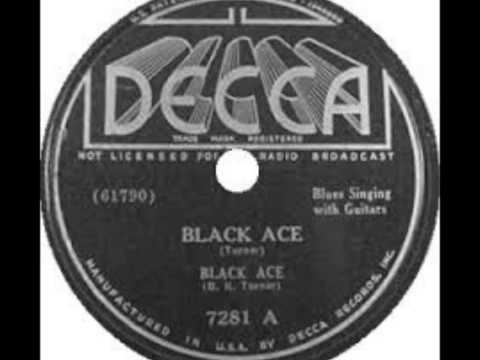
Babe Kyro Lemon Turner built his first guitar, bought a National resonator, and worked out a lap-steel style one critic called Hawaii meeting the Delta. He recorded six songs for Decca in Dallas in 1937, including “Black Ace,” which gave him his name and the theme music for his radio show on KFJZ in Fort Worth.

The army interrupted him, and he spent most of the next twenty years outside music, surfacing in the 1941 film The Blood of Jesus and then in the 1962 documentary The Blues, which led to an Arhoolie album recorded in 1960. He died in Fort Worth in 1972. Even his birth year is unsettled — AllMusic says 1907, the standard references 1905 — which is about right for a man who was a rumour for most of his career.

Start here“Black Ace” · Decca · 1937
Open on YouTube
Lap steel KFJZ radio, Fort Worth Arhoolie, 1960
No. 35 TA

Texas Alexander

1900 – 1954 OKeh · 1927–30s “Long Lonesome Blues”

Alexander sang the blues without playing an instrument, which in the 1920s made him unusual and in the histories makes him hard to file. He had a huge, declamatory voice and an apparently inexhaustible supply of verses, and OKeh paired him with guitarists — Lonnie Johnson most famously, sometimes Eddie Lang — who had to follow a singer with no fixed meter.

“Long Lonesome Blues” (1927) sold well and set the pattern. He was Lightnin' Hopkins's cousin, which is the fact most people know about him, and he ended up in prison in the 1940s before dying in Houston in 1954. His recordings are the best evidence of how much of this music was sung before it was played.

Start here“Long Lonesome Blues” · OKeh · 1927
Open on YouTube
Sang without a guitar Backed by Lonnie Johnson Lightnin' Hopkins's cousin
No. 36 WP

Washington Phillips

1880 – 1954 Columbia · 1927–29 “Denomination Blues”

Phillips was a Texas preacher who recorded gospel for Columbia and accompanied himself on an instrument nobody has ever conclusively identified — long described as a “dulceola,” apparently two zither-like string instruments played at once, and rebuilt by researchers from photographs. The sound is a shimmering, bell-like chime underneath a gentle voice.

“Denomination Blues” is a dry, funny tour of American church politics, recorded in two parts in 1927. He made a couple of dozen sides and then went back to his life; his music survived mainly because collectors kept the 78s and, later, because it was licensed for soundtracks. The man himself stayed out of the blues canon almost entirely, which is a mistake — this is the blues' closest relative, sung by a master.

Start here“Denomination Blues” · Columbia · 1927
Open on YouTube
The “dulceola” Gospel blues Two dozen sides
No. 37 FH

Frank Hutchison

1875 – 1929 OKeh · 1926–29 “Worried Blues”

Hutchison was a white coal-country guitarist from West Virginia whose “Worried Blues,” cut for OKeh in 1926, is among the earliest commercial recordings of country blues by a white musician. He played slide across his lap with a knife or a steel, and sang in a high, pinched mountain voice that has more in common with the Delta than with the hillbilly catalogue he was filed under.

He recorded for four years and died in 1929, at fifty-four, before the folk revival could make anything of him. The colour line in the record business meant his records were sold as “old-time” rather than “race,” which kept him out of the blues histories and out of the conversation about where this music actually came from.

Start here“Worried Blues” · OKeh · 1926
Open on YouTube
Worried Blues Lap slide, West Virginia Filed as “old-time”
No. 38 PA

Pink Anderson

1900 – 1974 Columbia · Bluesville “The Titanic”

Anderson spent most of his working life in medicine shows, travelling the South with a guitar and a repertoire of comic songs, ragtime and blues; he recorded a handful of sides with Simmie Dooley in 1928 and then nothing for more than thirty years. The folk revival found him in Spartanburg in 1961, and he made a small, wonderful body of albums for Bluesville before he died in 1974.

His “The Titanic” is a dark, funny piece of oral history — the disaster as a Black workingman's joke — and it is the reason he still gets played. He is also half of the answer to a trivia question: Syd Barrett took Pink Floyd's name from two Carolina bluesmen, Pink Anderson and Floyd Council. The band became famous. Neither man did.

Start here“The Titanic” · Bluesville · 1961
Open on YouTube
The Titanic Medicine-show circuit Half of Pink Floyd's name
No. 39 PC

Pee Wee Crayton

1914 – 1985 Modern · 1948–50s “Blues After Hours”

Crayton moved from Texas to California, learned his trade in the Central Avenue clubs, and in 1948 walked into a Modern Records session and cut “Blues After Hours” — an unhurried, elegant instrumental that topped the R&B chart and more or less invented the template for West Coast blues guitar.

He followed it with “Texas Hop,” and then the hits stopped, which in that industry meant the career was considered over. He kept working clubs and occasional sessions for another thirty-five years and died in Los Angeles in 1985. Every glossy guitar instrumental in the California style descends from his 1948 record, and he is not in the room when the credit is handed out.

Start here“Blues After Hours” · Modern · 1948
Open on YouTube
Blues After Hours Modern Records, 1948 Central Avenue
No. 40 PM

Percy Mayfield

1920 – 1984 Specialty · 1950– “Please Send Me Someone to Love”

Mayfield wrote “Please Send Me Someone to Love” in 1950 and it went to number one on the R&B chart — a slow, plainspoken plea that is closer to poetry than to blues as the era sold it. He was billed as “the poet of the blues,” and for once the marketing was accurate.

In 1952 a car crash left his face badly scarred, and he spent the rest of his career singing behind dark glasses and, for a while, behind the wheel of a touring car he drove himself. Ray Charles recorded a string of his songs, including “Hit the Road Jack,” which became one of the biggest records of the decade. Mayfield died in Los Angeles in 1984. The songs are everywhere; the name is not.

Start here“Please Send Me Someone to Love” · Specialty · 1950
Open on YouTube
Please Send Me Someone to Love Wrote “Hit the Road Jack” Poet of the blues
No. 41 JP

Junior Parker

1932 – 1971 Sun · Duke · 1950s–60s “Mystery Train”

Parker was nineteen when he cut “Mystery Train” for Sun in 1953 as Little Junior's Blue Flames — a Memphis record with a stop-time riff and a vocal that floats above it, later covered by Elvis Presley and treated ever since as a rockabilly cornerstone. He also wrote “Next in Line,” a hard-luck song about the undertaker, and fronted Duke Records through the 1960s with a smooth, jazz-inflected band.

He had a chronic heart condition and died in 1971, during surgery, at thirty-nine. Presley's version is the one in the hall of fame; Parker's is the one that made it possible, and he is usually a name in the session listing rather than the headline he was in Memphis.

Start here“Mystery Train” · Sun 192 · 1953
Open on YouTube
Mystery Train Sun 192 Died at 39
No. 42 LW

Little Willie John

1937 – 1968 King · 1955–61 “Fever”

John was eighteen and barely five feet tall when King Records signed him in 1955, and he cut “Fever” in Cincinnati on 1 March 1956 — a minor-key blues with finger snaps, two saxophones and a vocal so controlled it sounds like the room has gone quiet. Peggy Lee covered it, Madonna covered it, and John was paid like a session singer.

He had sixteen R&B chart hits in six years. Alcohol and a fight at an after-hours party in Seattle in 1964 led to a manslaughter conviction, and he died at Walla Walla in 1968, at thirty, having spent two years in prison. Rumours about the death have never been settled. He was inducted into the Rock and Roll Hall of Fame in 1996, nearly thirty years later, and remains the clearest case of a voice the industry used and then lost track of.

Start here“Fever” · King 4935 · 1956
Open on YouTube
Fever, 1956 Dead in prison at 30 Rock Hall, 1996
No. 43 JS

Johnny Shines

1915 – 1992 JOB · Chess · 1950s–60s “Ramblin'”

Shines travelled and played with Robert Johnson in 1935, and spent the rest of his life being asked about it. He was a fine slide guitarist and a hard, declamatory singer in his own right, and his Chicago recordings of the early 1950s — “Ramblin',” “Brutal Hearted Woman” — are the sound of the Delta being plugged in without losing its menace.

He was recorded at Fisk University in 1965, taken up by the folk revival, and spent his last decades on the college and festival circuit, often playing solo and often explaining Johnson to audiences. He died in 1992. The friendship that made him quotable also made him a supporting character, which is precisely the problem this page exists to argue with.

Start here“Ramblin'” · JOB · 1950s
Open on YouTube
Robert Johnson's travelling partner Ramblin' Fisk, 1965

“I realized I was making everybody rich, and here I was poor.”

Arthur “Big Boy” Crudup — who wrote “That's All Right”

Crudup belongs on this list too, and he is on the essay page. “That's All Right” was recorded in 1946 and covered by Elvis Presley in 1954; Crudup's royalties were tied up in a publishing company he didn't control, and he spent years working farms and a packing shed in Virginia before the revival found him. He died in 1974, before the money was ever sorted out. Read the case file.

Sources for this page: Dixon, Godrich and Rye, Blues and Gospel Records 1890–1943; the Discography of American Historical Recordings at the University of California, Santa Barbara, for matrix and issue data; Eagle and LeBlanc, Blues: A Regional Experience (2013); the Blues Foundation Hall of Fame entries; AllMusic and Britannica biographies; and Smithsonian Folkways and Arhoolie liner notes. Where the record is disputed — Black Ace’s birth year, Hambone Willie Newbern’s death, and the authorship of songs credited to performers rather than writers — this page gives both versions rather than the tidier one.

Now go and hear something that isn't in the box set.

Every artist above has recordings in print somewhere. The archive is only useful if it sends you to the speakers.

See the rare ledger